Shelter-in-Place Scenarios: How to Survive 72 Hours Without Leaving Your Home
A practical guide to staying safe, fed, and sane when leaving isn't an option. Learn how to shelter in place during wildfires, chemical spills, extreme weather, and other emergencies.
Published 12/01/20256 min read
Sometimes the most dangerous move is trying to leave.
Wildfire smoke, chemical spills, civil unrest, extreme weather, active manhunts, infrastructure collapse—there are many emergencies where sheltering in place is the safest and smartest decision. Roads clog. Information is incomplete. Help is delayed. In those moments, your house isn't just a building—it's a life-support system.
This guide walks through how to survive 72 hours inside your home when stepping outside is unsafe or impossible. No fantasy scenarios. No fear-mongering. Just practical, tested preparedness.
What "Shelter in Place" Actually Means
Sheltering in place is not just "staying home."
It means:
- Limiting exposure to outside threats (airborne, violent, environmental)
- Conserving resources
- Reducing visibility and noise
- Maintaining hygiene, health, and morale
- Being ready to adapt if conditions change
It's controlled, intentional isolation.
Step 1: Decide Where You're Sheltering Inside the House
Not all rooms are equal.
Best Shelter Room Characteristics
Choose one primary room and one fallback if possible.
Ideal traits:
- Interior room (few or no windows)
- On the lowest livable level (but not flood-prone)
- Solid door
- Enough space for everyone to sit or lie down
- Access to a bathroom nearby (or easily improvise one)
Closets, interior bedrooms, basements, and utility rooms often work well.
Pro tip: If smoke or air quality is the threat, higher floors may be worse. Hot, toxic air rises.
Step 2: Control Air, Light, and Visibility
In many shelter-in-place events, what enters your home is the danger.
Sealing the Room (Smoke, Chemicals, Heavy Pollution)
You don't need a bunker—just time.
- Close all windows and exterior doors
- Turn off HVAC systems that pull outside air
- Use towels, duct tape, plastic sheeting, or trash bags to seal:
- Door gaps
- Vents
- Window seams
- Place damp towels at door thresholds if smoke is present
This won't make your room airtight—but it can dramatically slow contamination.
Light Discipline
At night, light gives away:
- Occupancy
- Movement
- Room layout
Actions:
- Use lanterns or flashlights instead of overhead lighting
- Close curtains and blinds
- Avoid standing in front of lit windows
- Red light mode preserves night vision and visibility control
Step 3: Water Comes First (Even Indoors)
You already know the rule: 1 gallon per person per day minimum.
For sheltering:
- Keep drinking water separate from hygiene water
- Stage water inside the shelter room if possible
- Fill bathtubs and spare containers early if warning time exists
Water Priorities
- Drinking
- Medications
- Basic hygiene (hands, face)
- Minimal food prep
Don't underestimate dehydration—it degrades decision-making fast.
Need to calculate your exact water needs? Use our Water Needs Calculator to determine how much water your household requires for a 72-hour shelter-in-place scenario.
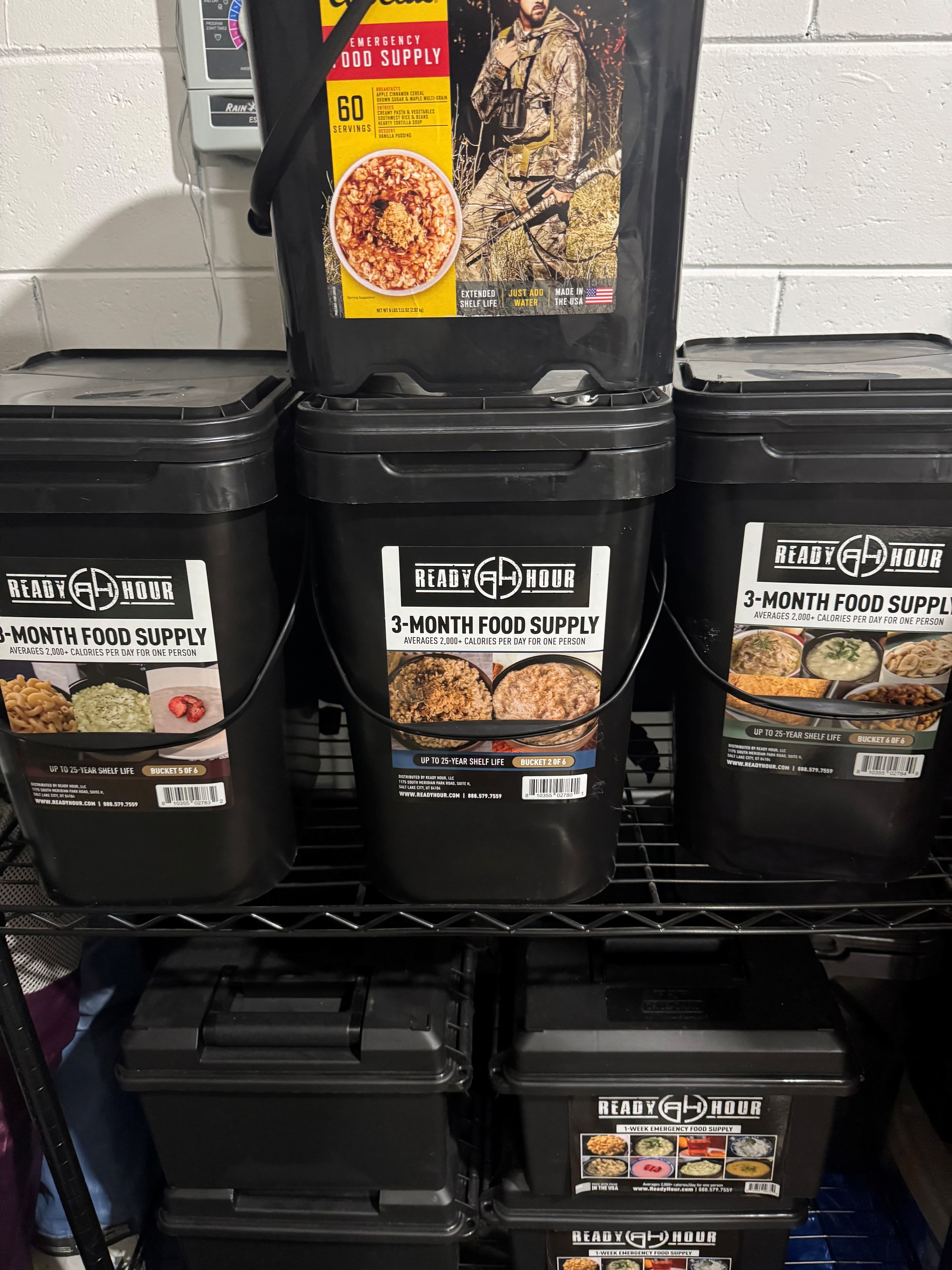
Step 4: Food That Works When You're Stuck
This is not the time for elaborate cooking.
Best Shelter-in-Place Foods
- Ready-to-eat canned foods
- Protein bars
- Nut butters
- Crackers
- Shelf-stable comfort foods
- Freeze-dried meals only if water is plentiful
Avoid:
- Salty foods without water
- Foods requiring long cook times
- Anything you've never eaten before
Eat smaller, regular meals to maintain energy and morale.
Stress burns calories faster than people realize.
For detailed guidance on building your emergency food supply, see our Home Food Storage Fundamentals guide. You can also use our Food Storage Duration & Rotation calculator to ensure you have enough calories and protein for your household.
Step 5: Bathroom & Sanitation (The Uncomfortable Part)
If utilities fail or you can't move freely, sanitation becomes a problem fast.
Simple Emergency Toilet Setup
- 5-gallon bucket or spare trash can
- Heavy-duty trash bags
- Kitty litter, sawdust, or shredded paper
- Gloves and hand sanitizer
Line the bucket, add absorbent material after each use, tie off bags securely, and store away from living areas.
Hygiene Basics
- Baby wipes > nothing
- Hand sanitizer before meals
- Tooth brushing still matters (infection risk rises quickly)
- Change socks daily if possible
Cleanliness preserves health and morale.
Step 6: Power, Information, and Communication
Information keeps you alive—but misinformation gets people killed.
Power Strategy
- Preserve phone batteries (airplane mode when idle)
- Use power banks sparingly
- Avoid unnecessary device usage
Prioritize:
- Emergency alerts
- Family communication
- Local updates
Information Sources
- Battery or hand-crank radio
- Local emergency broadcasts
- Avoid doom-scrolling social media rumors
Have one person act as the information gatekeeper to prevent panic.
Planning your power needs? Our Generator Load & Power Planning Tool helps you calculate exactly what appliances you can run and for how long during an outage.
Step 7: Noise, Movement, and Security
Sheltering doesn't mean ignoring security.
Noise Discipline
- Keep TVs and radios low
- Manage pets (leashes, calming routines)
- Children should know "quiet time" expectations
Security Mindset
- Lock exterior doors
- Reinforce your shelter room door if needed
- Avoid opening doors to unknown persons
- Communicate with authorities only when necessary
If something feels off, stay put until verified safe.
Step 8: Mental Health & Morale (Often Overlooked)
72 hours can feel like a week under stress.
Morale Tools
- Card games, books, simple entertainment
- Familiar routines (meals, bedtime)
- Reassurance for children
- Controlled breathing during anxiety spikes
Fear spreads faster than any disaster—don't let it run the house.
Step 9: Know When Shelter-in-Place Ends
Sheltering is temporary.
You should re-evaluate regularly:
- Air quality improvements
- Official evacuation orders
- Structural damage
- Medical needs
Leaving too early is dangerous. Leaving too late can be worse.
Final Thoughts
Sheltering in place isn't passive. It's an active survival posture.
When done right, it:
- Buys time
- Reduces exposure
- Prevents panic-driven mistakes
- Keeps your family alive until conditions stabilize
You don't need a fortress. You need planning, discipline, and realistic expectations.
If you can shelter safely for 72 hours, you can outlast most emergencies.
Preparedness isn't about fear.
It's about staying calm when others can't.
Stay ready.
Get Prepared
Subscribe to get our free 72-hour kit checklist and practical preparedness tips.